The short answer
Small industrial space is delivered in one of three conditions, and the words used are not standardized. Ask what physically exists in the bay on day one rather than which label the landlord uses. In general, the building envelope, utilities to the panel, heat, and the bathroom are landlord work. Anything specific to how you operate is yours.
We publish our own delivery standard below, because almost no landlord does and it is the question every prospect asks on a tour.
The three delivery conditions
Cold dark shell. Four walls, a roof, a slab, and a utility stub. No heat, no lighting, no bathroom, sometimes no interior walls. Cheapest rent, largest tenant bill.
Warm shell. The envelope plus the systems that make the space usable: heat, lighting, power distributed to a panel in the space, and a bathroom. Interior finishes are minimal. This is the normal delivery for small industrial space and what most trade tenants want.
Turnkey or full buildout. The landlord builds to your plan and you move in. Rent reflects it, and you are usually paying for that work over the term whether or not it is itemized.
Nobody enforces these definitions. A listing that says "warm shell" might not include a bathroom. Ask for the list. Whichever condition you get, weigh it against what shop space actually costs to rent in Vermont before comparing two listings on rent alone.
What we deliver, specifically
Our standard at 310 Innovation Drive:
- Demising walls, the office, and the bathroom are drywalled, taped and spackled, not painted
- Remaining bay walls are drywall or particle board to nine feet
- Bare concrete slab, unsealed
- Built-in office and private bathroom in every bay, fixtures included
- Mini split serving the office and bathroom
- Propane unit heater in the bay
- Dedicated circuit breaker panel per bay, 100A to 200A available depending on the bay and the tenant load
- 110V and 240V receptacles installed, with three-phase available in all bays
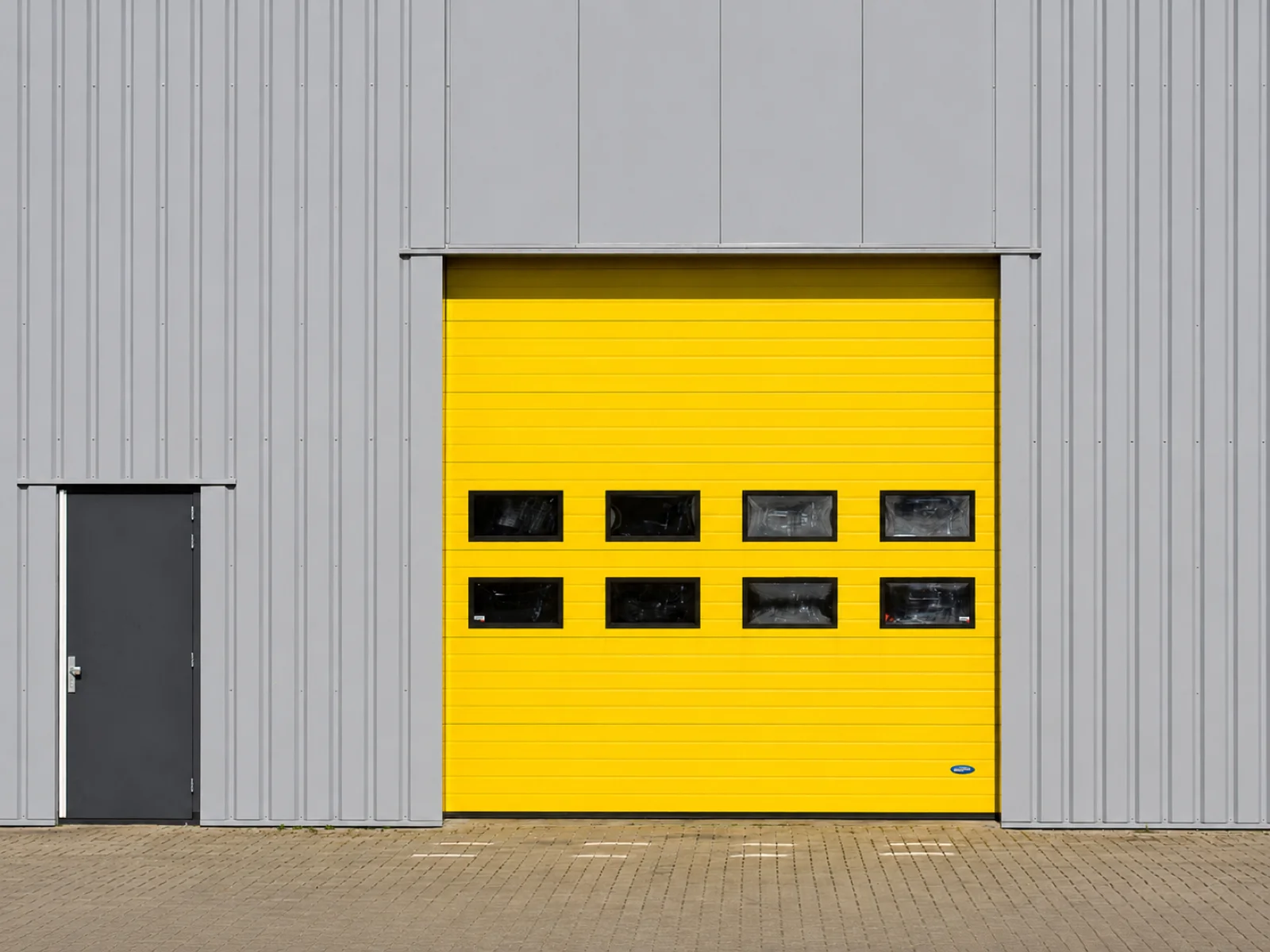
- 12 by 12 grade-level overhead door in every bay
It is not beautiful. It photographs poorly and it works. What it means practically is that a trade tenant can move in and operate without hiring anyone, then add exactly the outlets, lighting, air lines, and racking their own work requires instead of paying for someone else's guesses. That includes the door itself: every bay ships with a grade-level opening, and whether that is enough or you need a dock-high door instead is worth working out before you tour.
What is almost always tenant work
Racking and shelving. Benches and workstations. Compressed air lines. Specialized ventilation or dust collection. Floor sealing or coating. Paint. Additional circuits and equipment-specific electrical beyond what is at the panel. Signage beyond the building standard. Security systems. Anything bolted to the slab.
Every tenant thinks they are going to paint the walls. Roughly a third do.
Tenant improvement allowances
A TI allowance is landlord money toward tenant work, quoted per square foot. On a 1,500 square foot bay, $3 per square foot is $4,500. The right number depends on what size shop bay your business actually needs, since allowance dollars scale with square footage you may or may not use.
Three things to understand.
It is not free money, it is term. An allowance is a landlord investing in a longer lease. Nobody funds buildout on a one-year deal. Expect the allowance to scale with commitment, and expect that asking for one moves the conversation to length rather than to rate.
How it is paid matters more than the number. An allowance can be reimbursed against invoices, credited as free rent, or amortized into the rent over the term at an interest rate. The third is a loan wearing a costume. Ask which one, and if it is amortized, ask what the rate is.
It comes with strings. Scope approval, licensed contractors, permits, lien waivers, and a deadline. Reasonable requirements, but they take time you should build into your move-in schedule.
At 310, an allowance is available where it buys a longer term. The most common reason a tenant asks: bringing customers to a shop bay usually means a counter, seating, or better finishes up front, and that kind of fitout is exactly what an allowance is for, since it stays with the building.
Who owns the work at the end
This is the clause tenants skip and later regret.
Anything permanently attached to the building, meaning walls, wiring, lighting, plumbing, and HVAC, generally becomes the landlord's property when the lease ends. Trade fixtures, meaning equipment you installed to run your business and can remove without damaging the building, generally stay yours.
The friction is in the middle. Whether you must remove what you built and restore the space is a negotiated term called a restoration or removal clause. A tenant who spent $20,000 on a spray booth and then paid to demolish it has been surprised twice.
Get it in writing at signing, not at move-out. Specifically: which improvements stay, which must be removed, who decides, and whether the landlord can require removal of something they previously approved. This is exactly the kind of detail that belongs in what is actually in a small industrial lease, not left to a handshake.
What to ask before you sign
- What exactly is in the bay on day one? Ask for a written list, not an adjective.
- What is the electrical service to my panel, and what is already distributed in the space?
- Is there heat in the bay itself, or only in the office?
- Who pays for utilities and how are they measured?
- Is there an allowance, how is it paid, and what does it require of me?
- What must I remove at the end, and what stays?
- Who maintains the overhead door, the heat, and the roof?
Frequently asked questions
What is a warm shell?
Generally the building envelope plus heat, lighting, power to a panel in the space, and a bathroom, with minimal interior finish. The term is not standardized, so ask for the actual list.
Is a tenant improvement allowance free?
No. It is the landlord buying a longer lease term, and depending on structure it may be amortized into your rent with interest.
Who pays to add electrical outlets in a shop bay?
Usually the tenant, beyond what is installed at delivery. Service to the panel is landlord work; distribution for your specific equipment is generally yours.
Do I get my buildout money back at the end of the lease?
No. Permanent improvements typically become the landlord's property. Equipment you can remove without damaging the building is usually yours to take.
Can I paint and seal the floor?
Usually yes with landlord consent. Get it in writing and confirm whether you will be asked to undo it later.
About this page
Written by the owner-operator of a three-bay flex building in the Rutland Airport Business Park, North Clarendon, Vermont, current as of July 2026. General information about how these deals are structured, not legal advice. Terms vary by building and by lease.
Want the delivery list for a specific bay? Call (802) 417-2107 or email leasing@innovationbays.com.